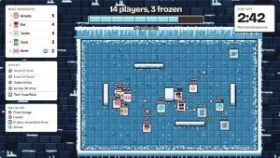
2 ready-made review sets for this topic, 18 questions in all, marked SL or HL, to play as a class game on the projector. Free to host, and students join with a code.
Topic 7 covers natural resources and how they are managed: natural capital and natural income, renewable and non-renewable resources, ecosystem services and resource security. Then energy: fossil fuels and renewable sources, and energy conservation, efficiency and storage. At higher level it adds environmental impact assessments, energy security, nuclear power and its radioactive waste, and the costs of mining battery metals such as lithium and cobalt. The guide's third subtopic, solid waste, has no set yet.
7.1 Natural resources: uses and management
7.2 Energy sources: uses and management
7.3 Solid waste
Where students slip
Natural capital is the stock; natural income is the yield from it. Using a resource sustainably means living off the income without running down the capital.
Renewable does not mean unlimited: a fish stock or a forest can still be used faster than it regenerates.
Energy conservation means using less energy, by changing what we do; energy efficiency means doing the same job with less energy, through better technology.
Nuclear power is low-carbon but not renewable: its fuel, uranium, is a finite resource.
The sets
Play this set opens the set in splycr, where you can read every question and host it for your class straight away. Hosting needs no account, and students join with the code on the board. A free account lets you copy a set and edit it.
The questions come from the Biology by Bradford flashcard bank. Each one plays as multiple choice, and the wrong options are other answers from the same set.
ESS has had a higher level course since the guide first assessed in 2026. Sets marked SL suit every ESS student, because higher level students study the standard level content too. Sets marked HL cover the additional higher level material in topics 2 to 8; Topic 1 has none, so its sets are all SL. The three HL lenses (environmental law, economics and ethics) have no sets yet.
Topic 7: Natural Resources
12 questionsSL
The sustainable yield of goods and services from natural capital, like interest earned on a bank balance (e.g. annual timber growth, fish catch)?
Answer: Natural income
Resources that can be regenerated at least as fast as they are consumed?
Answer: Renewable resources
Using less energy to perform the same task through improved technology?
One student defends the throne against the whole class, and a wrong answer from the champion costs double. Pairs like conservation and efficiency make a good duel.