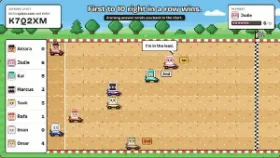
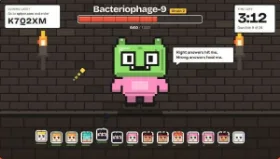
2 ready-made review sets for this topic, 24 questions in all, marked SL or HL, to play as a class game on the projector. Free to host, and students join with a code.
Topic 6 starts with the atmosphere and the natural greenhouse effect, then climate change: its causes and impacts, with feedbacks such as melting ice lowering albedo, and what can be done about it, through mitigation, adaptation and international agreements under the UNFCCC. It ends with stratospheric ozone: how ozone-depleting substances break it down, and how the Montreal Protocol has put the ozone layer on course to recover. At higher level it adds Milankovitch cycles, proxy data and climate models, the IPCC and its emissions scenarios, geoengineering, the polar ozone hole, and HFCs and the Kigali Amendment.
6.1 Introduction to the atmosphere
6.2 Climate change: causes and impacts
6.3 Climate change: mitigation and adaptation
6.4 Stratospheric ozone
Where students slip
The greenhouse effect is natural and keeps Earth habitable. The problem is the enhanced greenhouse effect, from the extra greenhouse gases human activity releases.
Weather is the conditions on a given day; climate is the average over decades, usually 30 years.
Mitigation tackles the causes of climate change, by cutting emissions or taking carbon out of the air; adaptation manages its effects, as flood defences do.
Melting ice lowers albedo, so the surface absorbs more sunlight and warms further: a positive feedback.
The ozone hole and climate change are separate problems. A thinner ozone layer lets more UV reach the ground; it is not what is warming the planet, though CFCs and the HFCs that replaced them are also greenhouse gases.
The sets
Play this set opens the set in splycr, where you can read every question and host it for your class straight away. Hosting needs no account, and students join with the code on the board. A free account lets you copy a set and edit it.
The questions come from the Biology by Bradford flashcard bank. Each one plays as multiple choice, and the wrong options are other answers from the same set.
ESS has had a higher level course since the guide first assessed in 2026. Sets marked SL suit every ESS student, because higher level students study the standard level content too. Sets marked HL cover the additional higher level material in topics 2 to 8; Topic 1 has none, so its sets are all SL. The three HL lenses (environmental law, economics and ethics) have no sets yet.
Topic 6: Atmosphere
16 questionsSL
Intensification of the natural greenhouse effect by human emissions of CO₂, CH₄ and N₂O, trapping extra heat in the atmosphere?
Answer: Enhanced greenhouse effect
The fraction of incoming solar radiation reflected by a surface (e.g. ice reflects more than ocean)?
Answer: Albedo
Strategies to manage the consequences of climate change (e.g. flood defences, drought-resistant crops)?
Topic 6 is full of near misses: greenhouse effect or enhanced greenhouse effect, mitigation or adaptation. In team Racer only one teammate sees the right option, so students have to say out loud why it is one and not the other.